What began with a Clinical Trial
turned into a Short Film
and evolved into a Better Way to Communicate with those living with Dementia
Read the Study. Watch the Film. Take the How You Are to Me Approach course. All for free.

A Better Communication Approach designed for EVERYONE
Take the training all at once or in small bite-sized lessons that are only a few minutes long each. Progress on your own time, and improve your communication and relationship with your loved one.
Learn how you want to.

The Course
- Intro
- Dementia Characteristics
- Bigger Picture Approaches
- Simple Tricks
- Identify Your New Skills
- Intro: The How You Are To Me Approach (Free) CourseThis training can be done in 2-3 minute moments at a time, all at once, or any combination with the time that you have available. The How You Are to Me Approach utilizes ecopsychosocial (non-pharmacological) approaches to dementia care, in line with the I’m Still Here teachings, with a focus on integrating foundational improvisational teachings (Ex. “Yes, and”, the Role of Status, being in the moment, responding to what you are given, listening, and playing to the top of your intelligence). We believe that those living with dementia still retain their personality and the essence of who they are, regardless of if they can remember a specific moment in their past, and that by modifying the way we communicate we can both provide those individuals with a fuller life and create tools to improve the relationship they have with all those around them.
- Experience & ExpertiseEvan Bass Zeisel’s experience and expertise in the dementia caregiving come from being around the dementia community the majority of his life (his father is a leader in the nonpharmacological treatment of dementia sphere of the industry), his experience as a Creative Consultant for the Scripted-IMPROV Project (as writer, performer, and training designer of the NIH and NIA Clinical Trial studying interactive-theater on the dementia population), and his extensive improv training at the renowned NYC Upright Citizens Brigade and Magnet Theaters.


- The 2 Approaches to Dementia TreatmentThe two main approaches to Dementia treatment are pharmacological and non-pharmacological. Pharmacological means that the treatment is using drugs or medical intervention. You will hear terms like “amyloid plaques” and “treating the cause” and there is a new drug or therapy on the market each day, it feels like. Often these drugs are barely effective, if at all, but because there is a desperation for a cure, they are pushed through to market and people pay more than they can afford for them. The main issue in the pharmacological approach is that the medical community has not determined what specifically causes the different dementias, beyond genetics. Without knowing the root cause, it is near impossible to cure. Alternatively is the non-pharmacological approach — one that approaches addressing the disease rather than trying to cure it without knowing its cause. This approach is what this course focuses on. The numerous benefits of non-pharmacological treatments is that (1) anyone can do them and they cost nothing, (2) they allow for better interactions, (3) they play to the strength of the individual living with dementia, and (4) you can do them in addition to any medical treatment and they can only help.
- They ARE Still HereMany people fall into the “Despair Narrative” and falsely believe that an individual suffering from dementia is “lost”. They are not. Dementia affects the brain’s ability to process, and similar to how sometimes you can have a word on the “tip of your tongue” but cannot find the word, an individual with dementia may not recognize a loved one, or say that a spouse or a child is not that, it does not mean that the person does not, deep down, still know the person. Actions speak louder than words. The way an individual with dementia hugs or greets or talks to a loved one, even when they cannot recognize them, is very different than when they talk to anyone else. Those with dementia require a different level of communication approach, but it is simply a different way of processing and communicating; they ARE still here.
- Processing of Complex TasksDementia affects the brain in making it more difficult for an individual to process complex tasks. Complex tasks are a series of simple tasks in which one usually needs to decide in what order the simple tasks are done – think getting dressed or laying the table. For individuals with dementia, simple tasks are achievable, but the necessity to come up with the simple tasks needed, and the order they need to be done, usually makes complex tasks too hard for them to accomplish. To empower an individual with dementia, it’s important to prime them to do simple tasks on their own.
- Situational AwarenessIndividuals with dementia have a slowed level of processing if items on their periphery — to the sides of them or from behind. They lack a good amount of situational awareness and are best approached from the front. It seems like a simple thing, but often we don’t think about it — we join someone from the side or from behind, and because they sense we are there, it is not a problem. With someone living with dementia, until they fully see you, they may not be aware of you, and so the interaction is start as if you sort of jumped out of no where and surprised them.
- Tertiary SymptomsTertiary Symptoms are not real symptoms of a disease but more a product of how the disease affects someone. In the case of dementia, anger and depression, are all tertiary symptoms — they are the affect of someone being told they are wrong, feeling like the things they think and feel are incorrect, and then their behavioral reactions on how to protect themselves. When you lash out in anger, no one comes to tell you you are wrong, they avoid you. When you withdraw and stop talking as much, people don’t have the opportunity to correct you because you aren’t saying anything. So realize that changing these tertiary responses are easily within your control, if you can change the way you communicate with those living with dementia to one that plays to their strengths.
- “Yes, And”“Yes, And” validates and joins in the reality that a Person Living with Dementia (PLWD) is going through; it is in contrast to a “No, But” that negates and then corrects an individual. When you are constantly told that you are wrong, how do you respond? You withdraw, you become depressed, you can become aggressive and push people away. So when approaching interactions with PLWD, use “Yes, And” – accept their reality (or validate their feelings) and then show them that you are on the same team. This does not mean that if someone is having a delusion to fully ride the delusion, but it does mean you can start at a place of agreement – “I need to pick up Jimmy” – even if Jimmy does not need picking up, the feelings of anxiety that the individual has surrounding the belief that they need to pick up Jimmy are real. You can always “Yes, And” feelings. Once you “Yes, And” a situation, you can thread it to a safe and calming place – You can validate feelings of anxiety, agree to help the person, and by going along initially (Saying “Yes”) you then have a willing teammate. You can help the person get ready to go get Jimmy, and in the process maybe comment on the beautiful jacket they have or that photo on the wall of them and you will be amazed that the PLWD’s focus can change. And instead of saying “No” and making the PLWD feel bad, you have said yes, de-escalated a tense situation, and allowed the person to feel validated fully along the way.
- The Role of StatusIn improv a performer can instantly create a character perspective by choosing their status (higher, equal, or lower) compared to the person they are doing a scene with. A higher status individual will always talk down to someone and make decisions for them. Someone of equal or lower status will always respect the choice and opinion of the other person. When interacting with someone with dementia, by assuming your status to be equal to or lower than the person living with dementia, you can create an easy way to always offer them genuine choice and control rather than accidentally making decisions for them without asking permission.
- Ask Opinions Over Specific MemoriesEpisodic memory (the ability to recall specific memories) is one of the areas most affected by dementia. Oftentimes, people think that means that a PLWD (person living with dementia) is no longer their self anymore; this is NOT true. The truth is that we must adjust the way we communicate in order to get to the personality of the individual. By focusing on opinions over specific memories, an individual living with dementia can shine. And you’ll find a complete lack of them being at a loss of words. Let’s change how we communicate
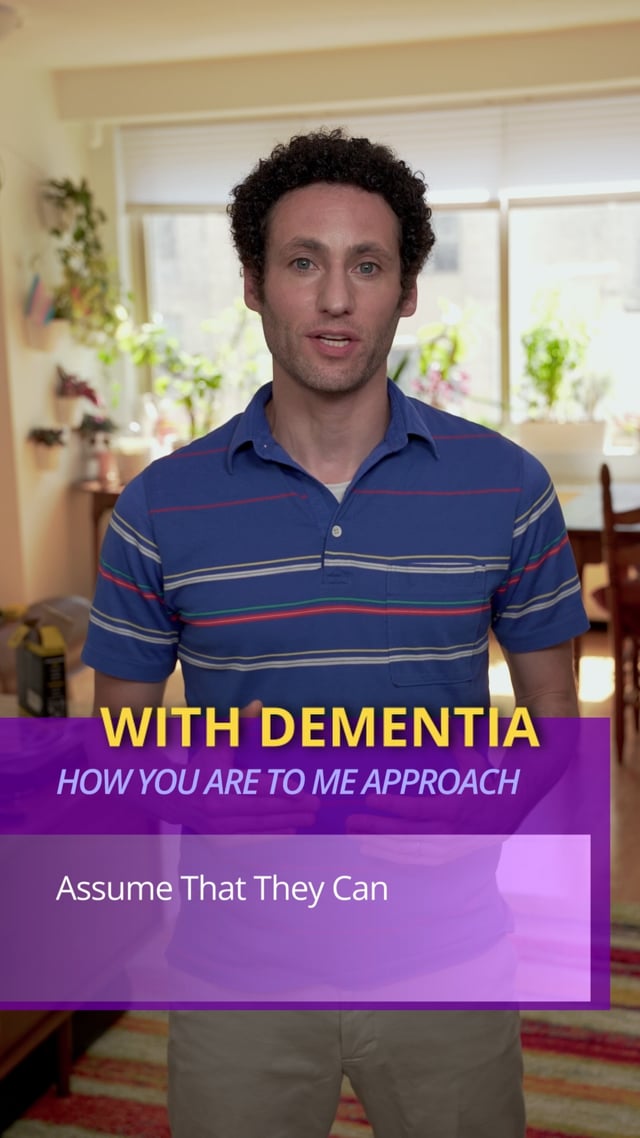
- Assume That They CanBy assuming that an individual with dementia can do something, you prevent yourself from removing their genuine choice and control. Many care-partners want to help and assist but, in the process, stop someone living with dementia from being able to do things they can, and enjoy, doing. Instead of just doing for them, assume that they can do something and only assist them when they show a desire or need for assistance. Complex tasks are harder for those with dementia to do, so instead, break up complex tasks into simpler ones, and they will be easier for a person to do themself.
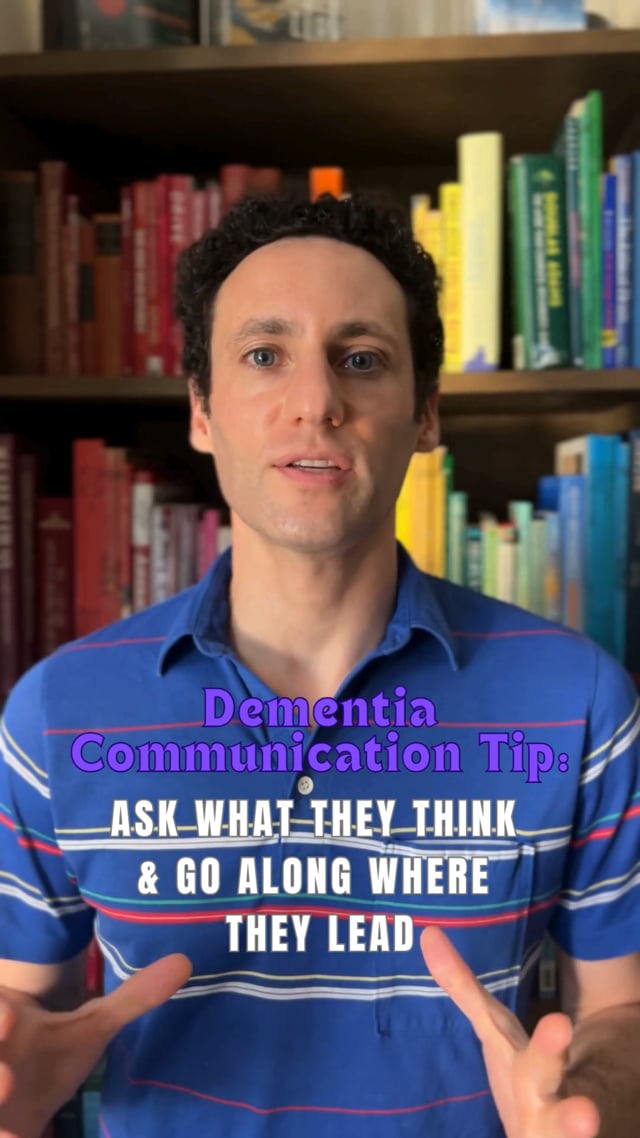
- Ask What They Think & Follow Their LeadIt is difficult for individuals with dementia to follow complex stories or conversations without a little assistance (see the technique of “Asides”). That said, one easy way to have a conversation is to ask what they think about something (or their opinion on something) and then follow their lead, asking for more information on their thoughts or their opinions, and kind of go with them for the conversation … wherever is may lead.
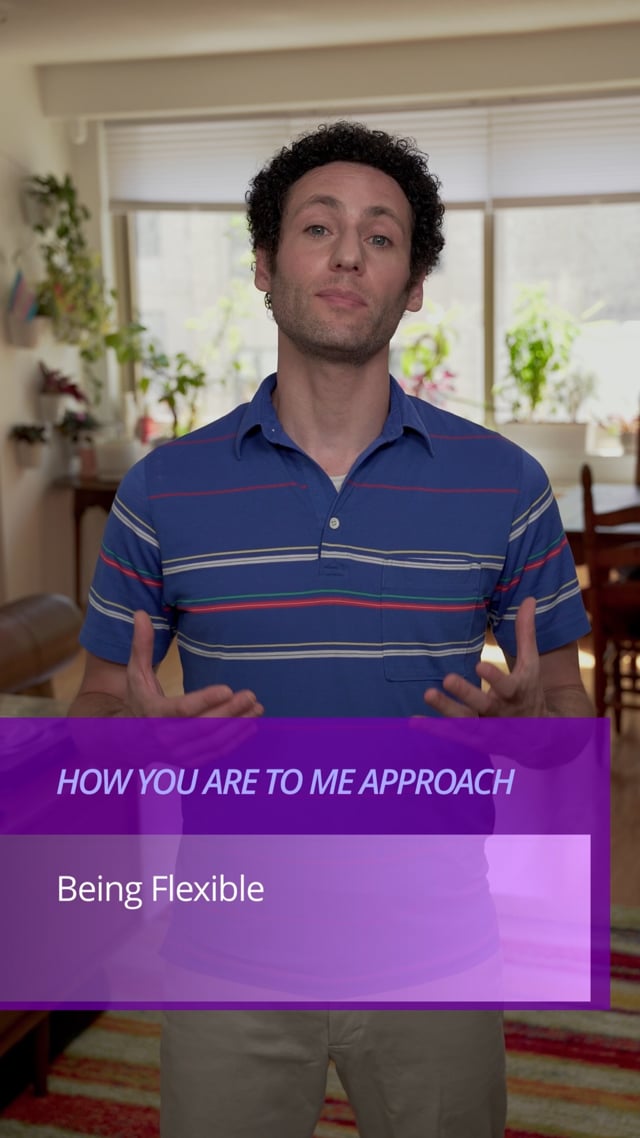
- Be FlexibleOne of the most stressful aspects of caregiving is the lack of control a caregiver often feels. If only we could control the situation, it would play out the way we want it to. But full control is not something any of us ever have, in any walk of life. Realizing and accepting that those items out of your control only can cause you stress if you try to control them is a big step to reducing stress. Those with dementia can be as obstinate (or even more obstinate) than those without dementia. Think about how you would react if you wanted to do something, and someone else told you that you had to do something different; so why would someone with dementia act any differently? All this to say, you may have set plans but you have to always be open to them changing. Utilizing the skills of “Yes, And” and “Threading” are key to being flexible but also still keep things on track.
- Self-CareOne of the most overlooked items for care-partners is self-care. You focus so much on caring for your loved one that you forget to care for yourself. But there is one simple truth: When you are too exhausted or too overwhelmed or sick, it is impossible to really care well for someone else. So putting yourself first, when it comes to self-care is extremely important. Find ways to de-stress; reach out to others when feeling overwhelmed; get sleep when you are exhausted; and when you feel sick, take care of yourself and heal, instead of just pushing through. You’ve got this, but you also need to be aware of your limits and to make sure you are taking care of yourself.
- Understanding the idea of InfantilizationUnderstanding the Concept of Infantilization. Caregivers can fall into the trap of trying to “help” someone with dementia by doing a task for them, but as a by-product the individual with dementia is accidentally being infantilized. Infantilization is not about “doing child-like things” but more about having the genuine choice and control to do what one wants. When you take that choice and/or control away from an adult living with dementia, that is when you creep into treating them like a child. How NOT to Infantilize Infantilization is the act of treating someone like a child. Too often, this is misinterpreted to mean an adult should not do things that are associated with children — imaginary play, read books that are for children, etc., INSTEAD of the truth, that infantilization happens most when you remove a person’s genuine choice and control — that is what we too often do to children. Believing that someone can, and NOT doing something for them when they can do it themselves is the best way to avoid infantilizing someone living with dementia
- Binary QuestionsA Binary Question is when you ask a question and then immediately follow it up with two potential answers to the question. This is playing directly into how dementia affects the brain – You offer genuine choice and control while at the same time presenting options so that the individual does not feel overwhelmed with having to formulate an answer from an infinite list of possibilities. And for the caregiver, it allows you to present answers that you can do … rather than getting an answer that may not be within your means.
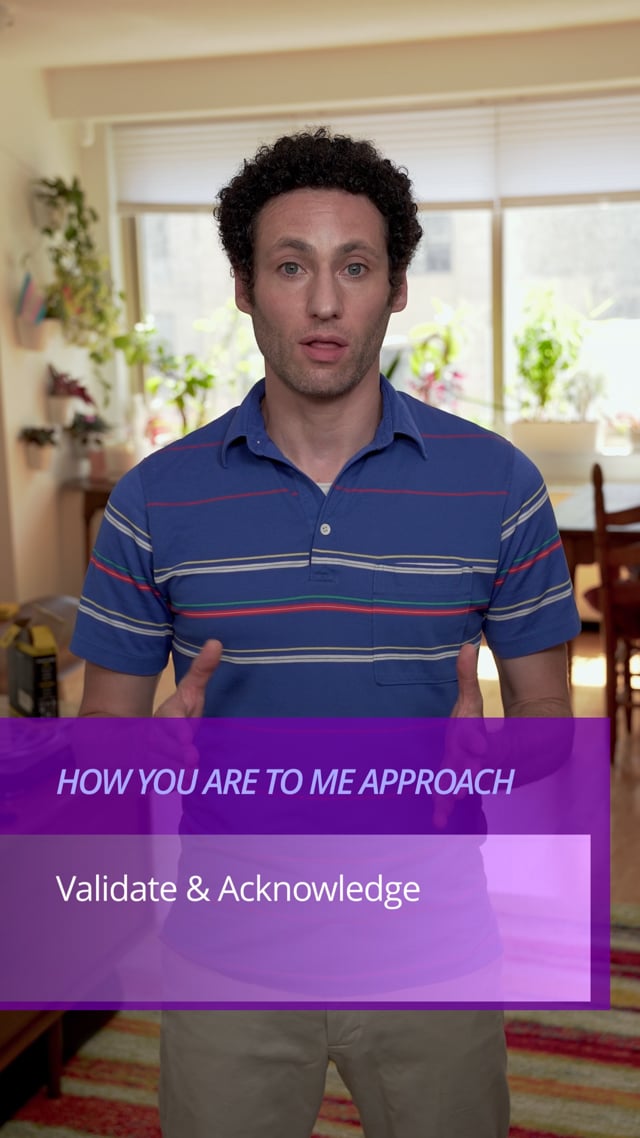
- Validate & AcknowledgeA basic human communication that is often difficult for us to do as much as we should in our non-dementia related communications. To feel like your concerns are heard is a fundamental human desire. When you are heard, even if you are not correct in your view, you at least feel like you are not being ignored. When an individual with dementia has an anxiety, be it based off of a real issue (wanting to leave a safe place but not being allowed to) or a delusional one (a hallucination that something dire is happening and they must resolve it or something bad will occur), the feelings are still real. Validating and acknowledging those feelings is a very important first step in forming trust, which leads to positive communication. When an individual with dementia has a delusion (they believe something is happening to them that causes stress, but the reality of it is not true) their feelings of stress and anxiety are nonetheless completely real. It is important to acknowledge and validate these feelings. Whether what they believe is true or not does not diminish the fact that what they are feeling is real to them. When someone is scared, they need comfort, not correcting.
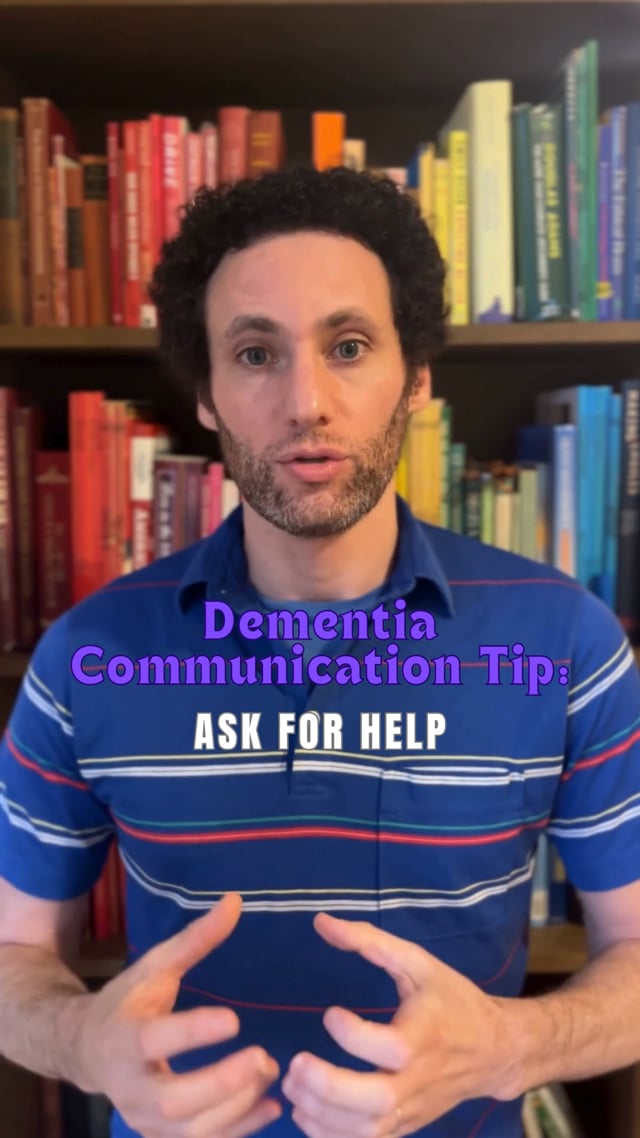
- Ask for HelpAsking an individual with dementia for help may seem counter-intuitive, but at its core it creates the ideal situation: one in which the PLWD (person living with dementia) has respect and genuine choice and control in their life. When you ask someone for help, you place them in the expert seat, and when they present the solution, they are the hero of the story. By asking for help in a task you know an individual can take on, you turn the table and instead of forcing them to do something, they choose and lead the way. Better interactions come from providing PLWD the respect and choice that they are used to, and deserve.
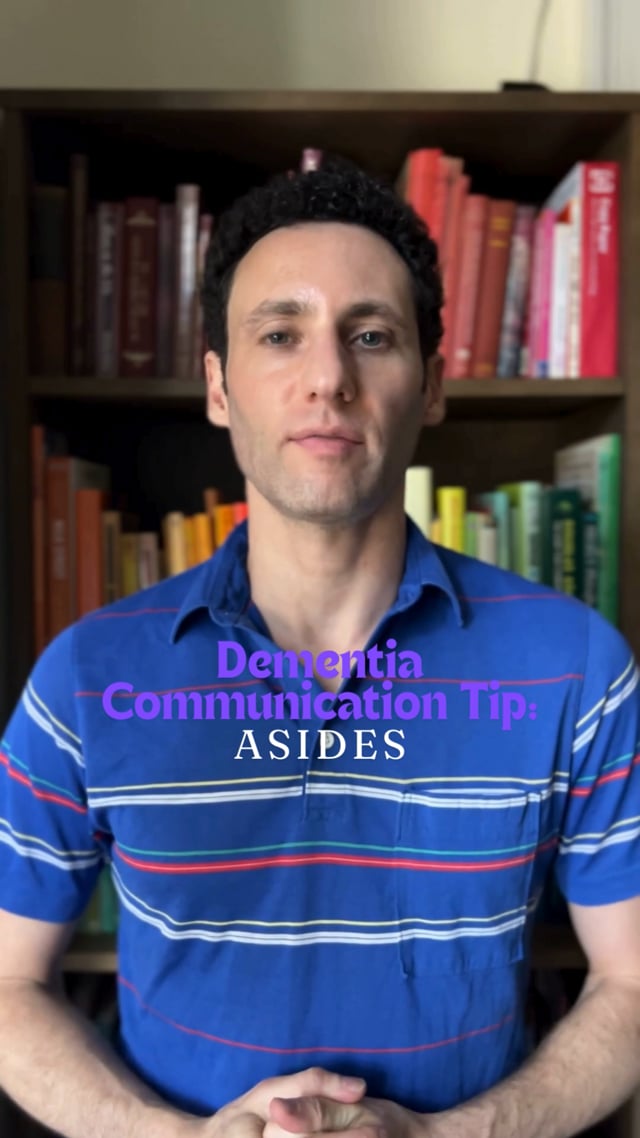
- AsidesAsides are a useful tool in group situations that can be used to help an individual with dementia feel more involved with what is going on around them. An aside is when you sit down, or take a knee, next to an individual with dementia, meeting them at eye level, and you let them know –in the simplest of explanations– what is being said or being discussed in the group. You pause for any questions they may have, and continue the back and forth. Keeping it simple, taking it slow, and listening are keys to doing an aside well. This is a great tool to use at a family gathering, and anyone, who understands how to do it, can do it.
- De-Escalate with Comforting TopicsDementia can cause anxiety – from a delusion of some stressful event happening to feelings of loss of control. One great technique to pivot feelings of anxiety to feelings of control is to introduce a topic in which the individual is an expert – the feeling of being the hero, the source of knowledge, and to dispense that knowledge to others will be comforting as it provides them both a sense of value and grounds them in a territory they are familiar.
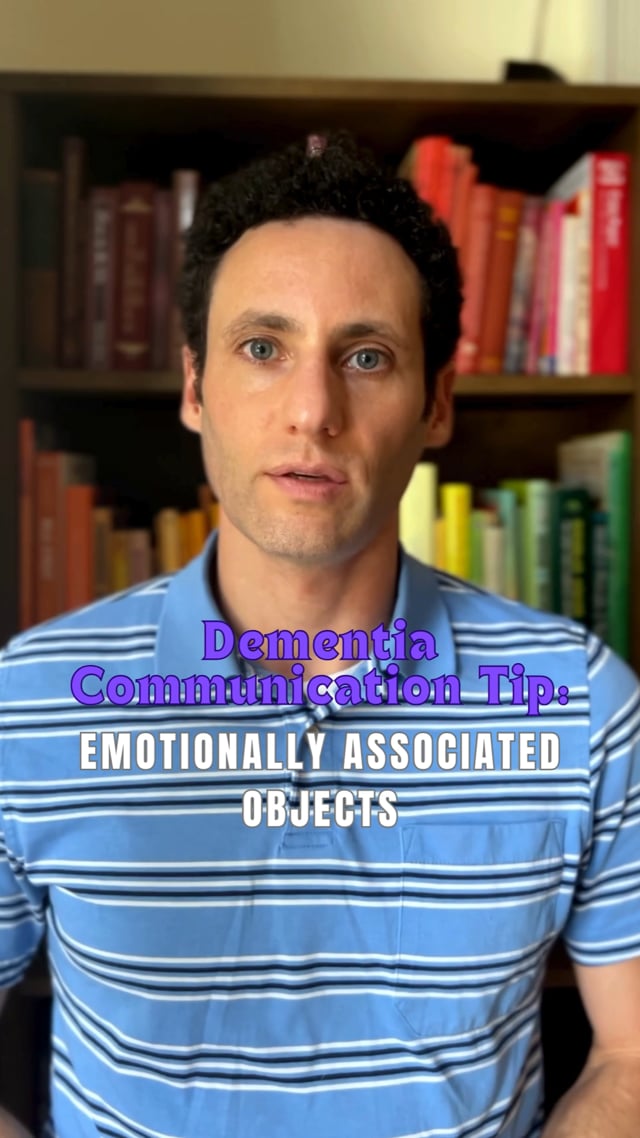
- Emotionally Associated ObjectsEmotionally associated objects, ones that have had meaning in the life of an individual living with dementia are helpful tools to help calm an individual in a stressful situation. Semantically-associated objects, Ie. ones that come with attached personal meaning, stick with individuals with dementia longer than everyday objects. Examples of these are a piano for someone who loved to play the piano or a screwdriver for someone who worked repairing things throughout their life.An object, or objects, in a Memory Box or having them on hand can be used to introduce a known element into a stressful situation, offering the route to calm instead of continued stress.
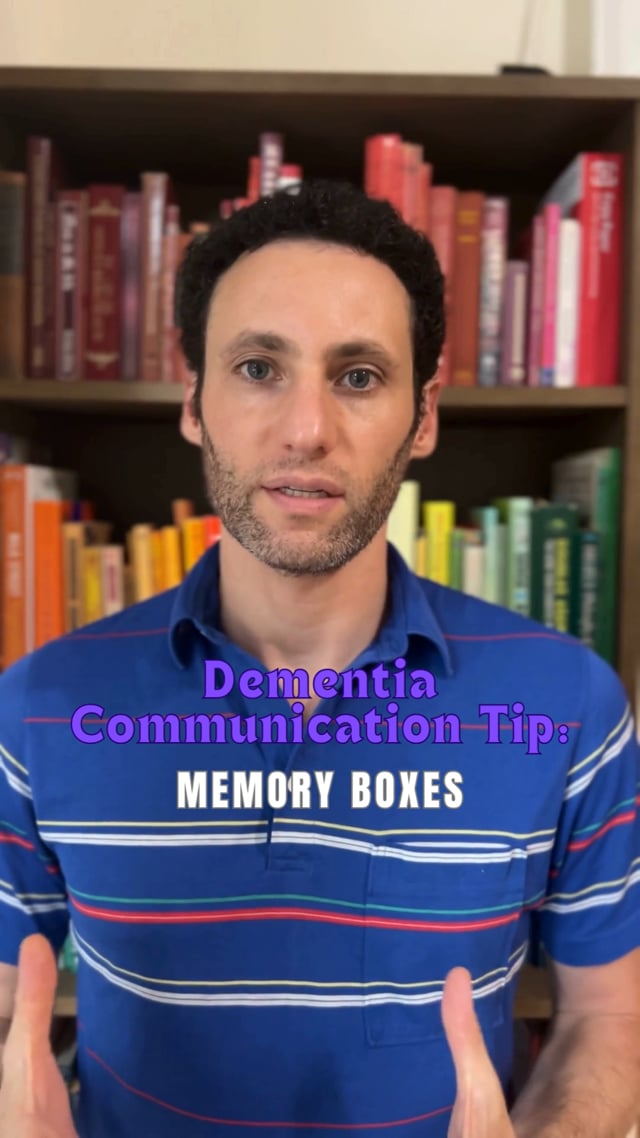
- Memory BoxesMemory Boxes are inset frames (usually called “Shadow Boxes”) in which you place items that have an historical/emotional association for the individual with dementia. If your mother was a singer, the box might contain a playbill from a show she performed at or a picture of her singing. If the person worked as a carpenter, small tools they often used could be adhered to the back of the box. Really anything that the person used a lot in life or was associated with something they did repeatedly, are great items to tact to the back of the box. You can then bring the Memory Box out as a means to calm someone during a time of anxiety or even just as a visual reminder/walk down memory lane, letting the person with dementia guide the story when they interact with the Memory Box.
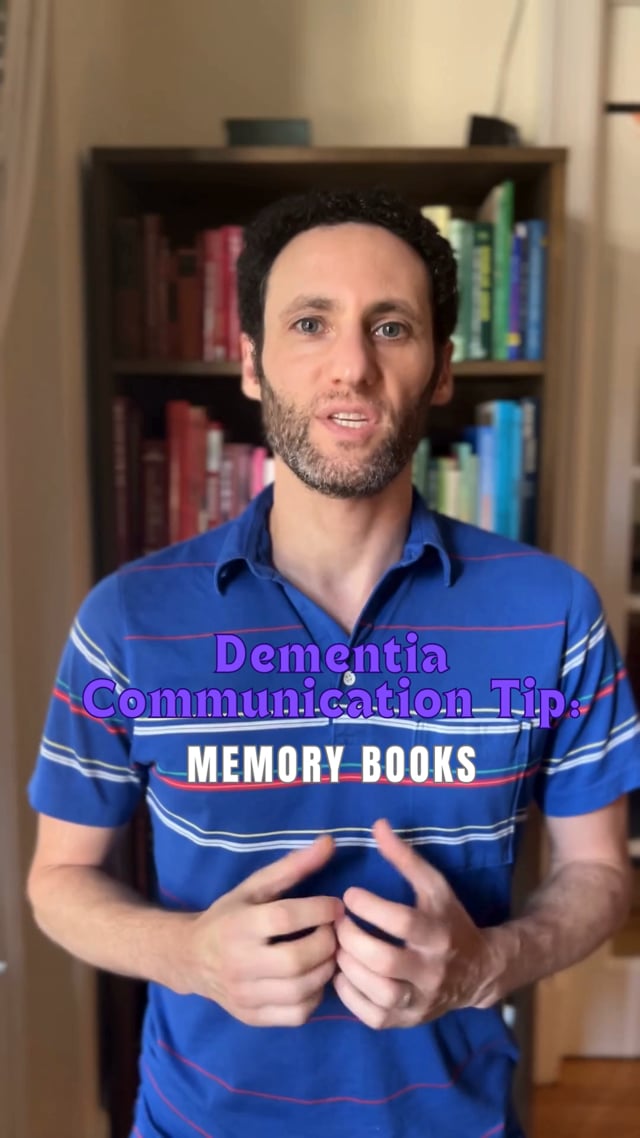
- Memory BooksEmotionally associated photographs, ones that have meaning to an individual living with dementia are helpful tools to help calm and ground an individual with dementia. One great way to leverage these photos is to create a Memory Book. A memory book is a book that features a large photo on each page with large, legible text that describes the photo, so that the person living with dementia or others can read it out loud. The descriptions should be simple and clear.. There is a great example of this in the dementia short film “How You Are to Me’”, found free online. Be it to reminisce or calm in a tense situation, memory books are great items to have available for a person living with dementia. It is kind of like a scrapbook of your life, but with a specific layout and more simplified.
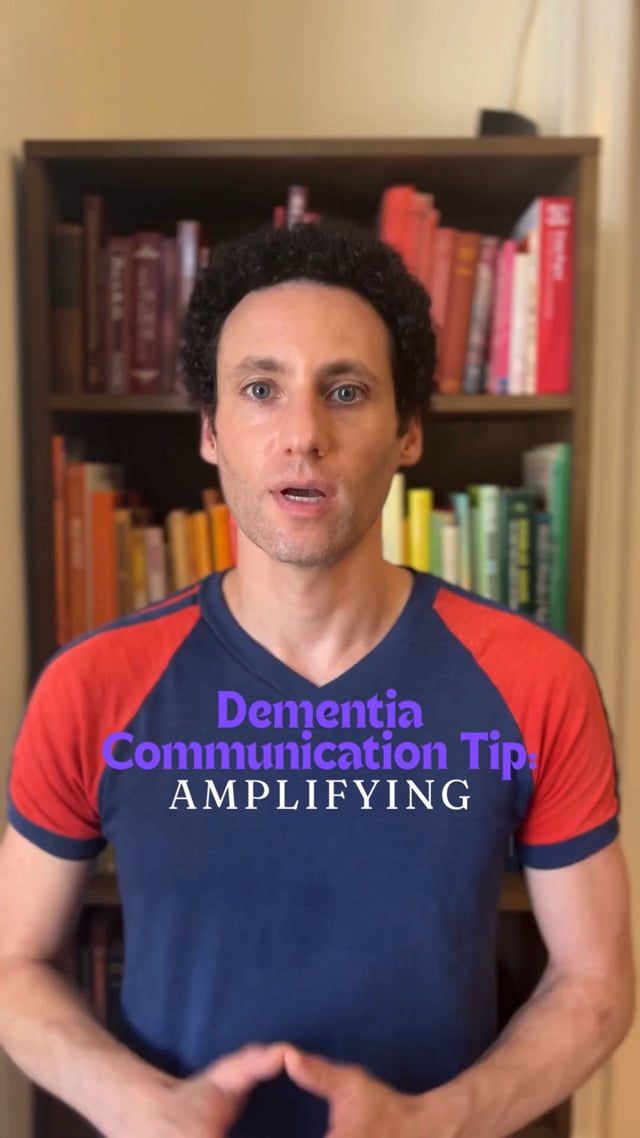
- AmplifyingAmplifying is a technique to use when in a group setting. Oftentimes it is difficult for later stage individuals living with dementia to communicate, which can leave them feeling outcast or like observers rather than participators in a conversation. By listening, confirming with the individual that you understand them (you can use the technique of Echoing), and then sharing with the greater group what the individual wishes to share, you include them and give them voice when they may not have it themself. Feeling part of a community has been shown to be a factor in self-esteem and in a positive way for mental health, in general.
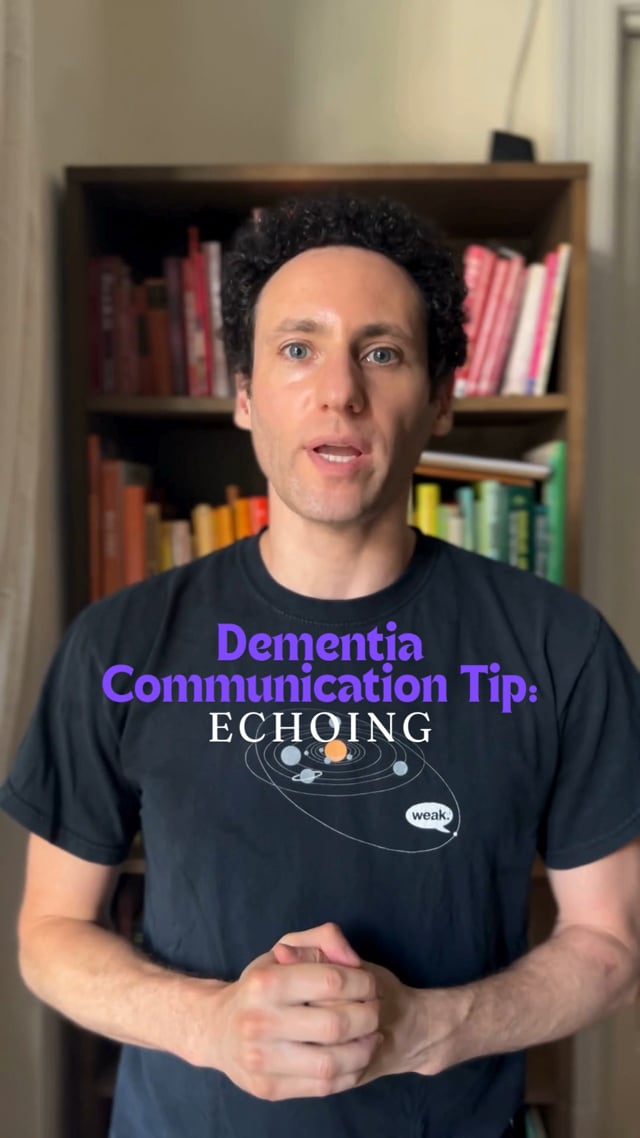
- EchoingEchoing is a nice way to help a person with dementia feel heard. Just like its name, the Technique of Echoing involves listening to a person with dementia within a group setting and then echoing what they said (usually a little louder or with the attention of the group) so that their voice can be better heard. Some individuals living with dementia have a hard time figuring out when to add their thoughts to a conversation, they have trouble following a conversation so mumble their thought, or withdraw from the conversation so as avoid making a mistake. Taking the time to hear the individual makes them feel heard, and echoing then allows them to participate in the group with your assistance. This pairs up well with “Asides”, as part of helping the individual feel a part of the group.
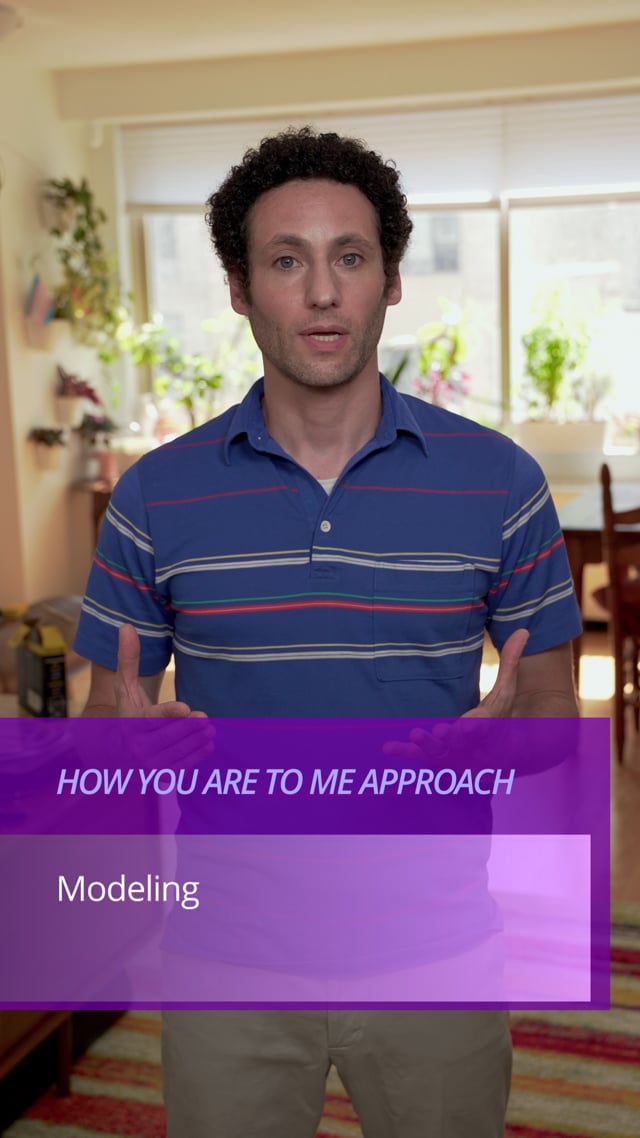
- ModelingInstead of doing something for an individual with dementia, if you model a task – show them how to do it, oftentimes that individual can use your visual cues to do the task themself. This creates a value in the self that would not exist if their ability to do a task was taken away from them. Believe they can first, and you will be amazed what can be done, if you create the right environment for how they process the world.
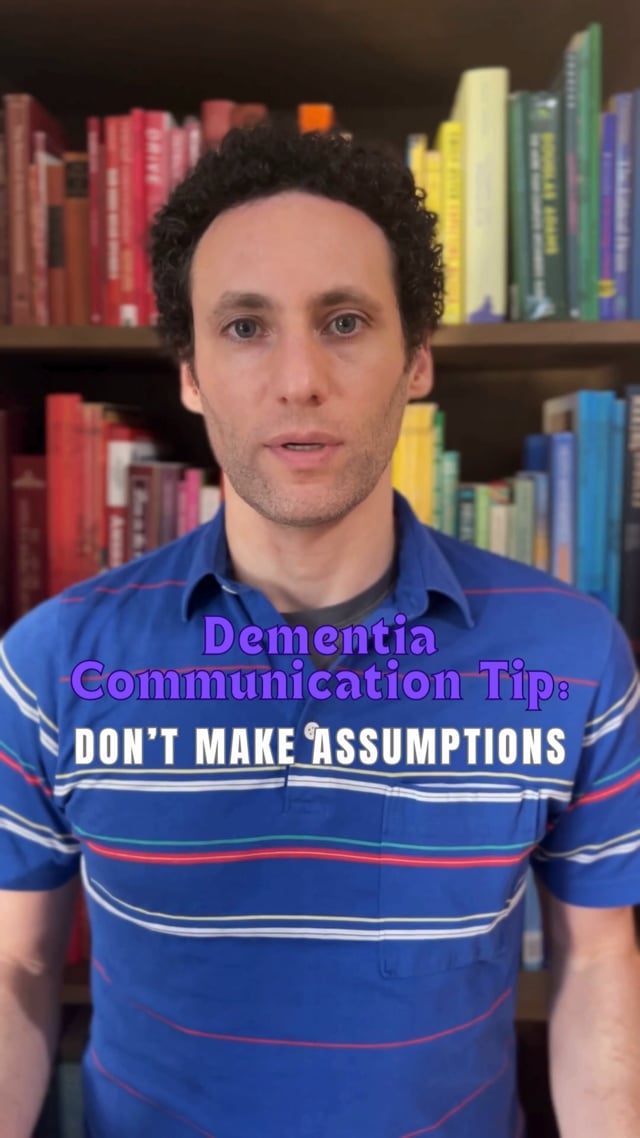
- Don’t Make Assumptions That They Can’tWe all know (or maybe not all) the common saying, “When you assume, you make an “ass out of ‘u’ and ‘me'” (breaking up the word “ass-u-me”). What it means is that oftentimes we make assumptions that are not actually correct and instead end up making things more difficult or worse for the person or situation we are dealing with. The same applies to interactions with those living with dementia. Don’t assume that the person can’t. Do assume that they can. One of the pitfalls of “helping” someone else is we often assume that someone is incapable of doing something and we do it for them. If they are capable, this leads either to resentment or aggression that you took it away from them or didn’t provide them with the choice to decide themself or it leads to that person stopping doing the things they can do. You always want to encourage individuals to do as much as they can for themselves. So when in doubt, assume that they can and see if they can — they may need some minor assistance or for you to break up a complex task into simpler ones, but you may be surprised at how capable the person you were doing things for actually is.
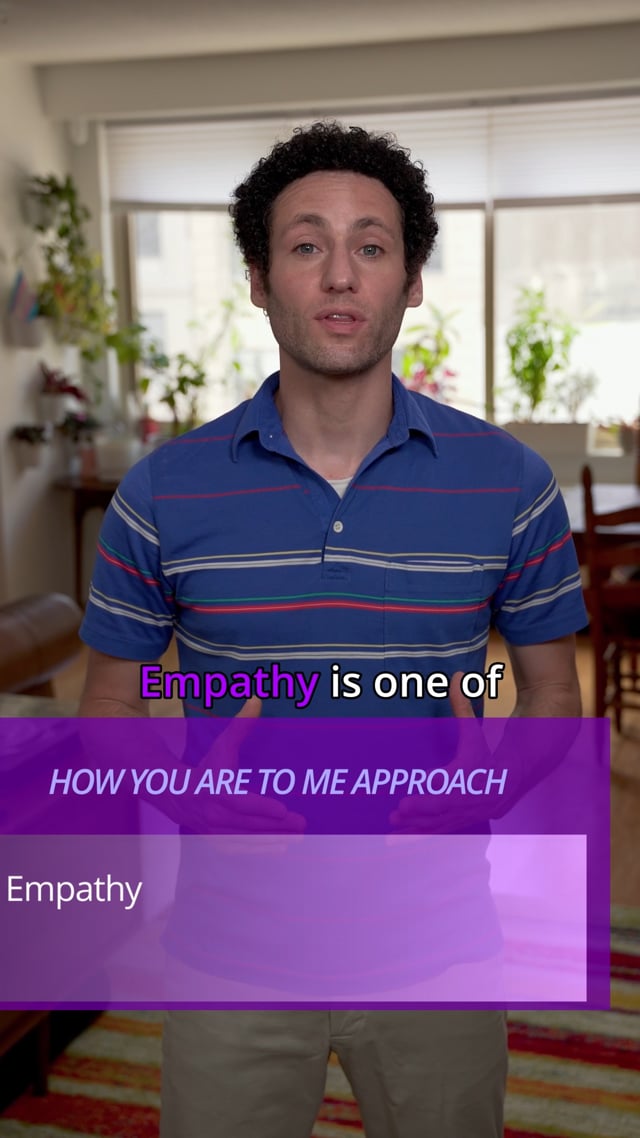
- EmpathyListening is key to understanding, and more importantly, of someone else feeling heard. Empathy/Putting yourself in someone else’s shoes is a sure way to see what is truly needed … If you provide what you yourself would like to have, you will never overstep and always offer genuine choice and control.
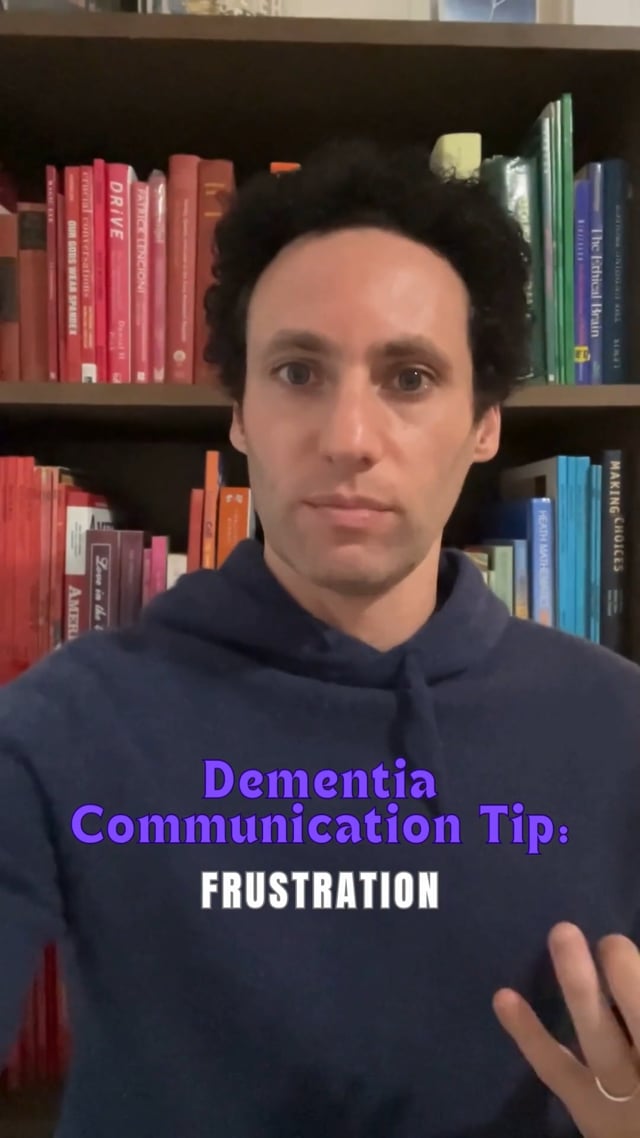
- FrustrationIt’s okay. I want to start with that first and foremost. Things can get overwhelming, especially as a caregiver and we can get frustrated. So give yourself the first big break and tell yourself that it is okay. Get in the habit of taking a breath, but also forgiving yourself for getting angry or frustrated. This ain’t easy. Next though, I want you to also think about how frustrating it must be for someone living with dementia — it’s hard to remember simple things, associations that once came easily to you are now always on the tip of your tongue, complex tasks seem overwhelming and too difficult to follow, and sometimes when asked a question you have trouble coming up with even what would be considered an appropriate response. It is frustrating to have dementia too. Now that we’ve gotten that out of the way. As it is important for you to forgive yourself for getting frustrated, make sure to also forgive your loved one for having frustrations themself or doing things that may inadvertently make it harder for you. We all need a break now and again. Remember to take a breath. This too shall pass.
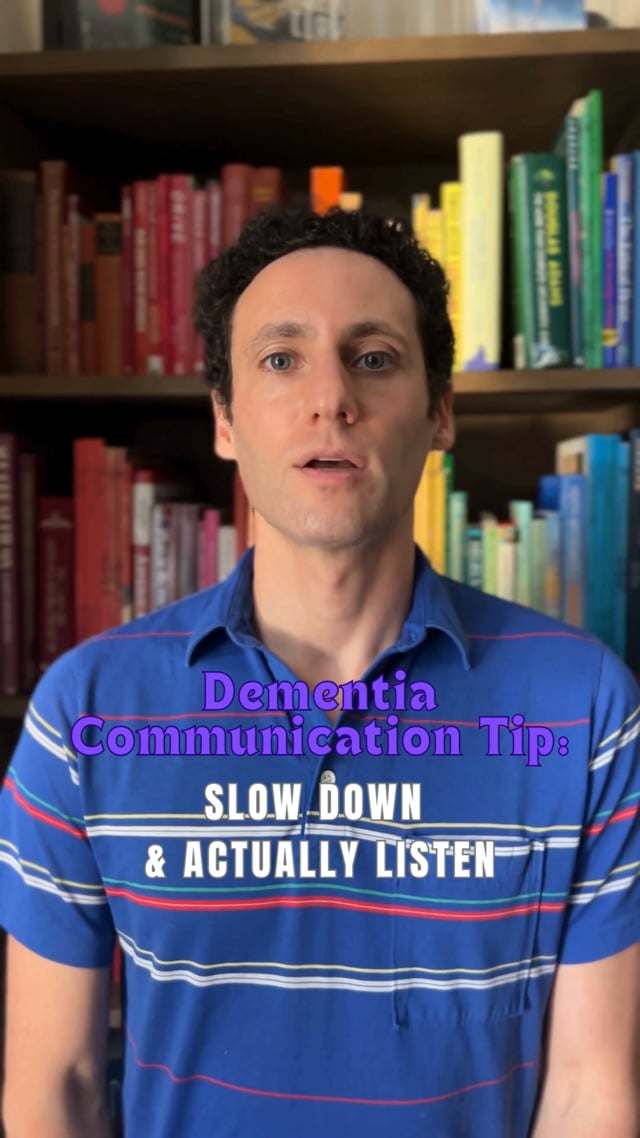
- Slow Down & ListenAs dementia progresses, the ability to express oneself verbally can become difficult. Some people hear an individual with dementia trying to communicate and say that they are not understandable – when in fact the truth is the person does not want to take the time to really listen. Slow down (when talking) and take the time to listen (using repetition) and almost any verbal communication is surmountable But you need to be willing to take that time. Slow down the fast pace that our lives usually run on, and go at their pace, not our own.
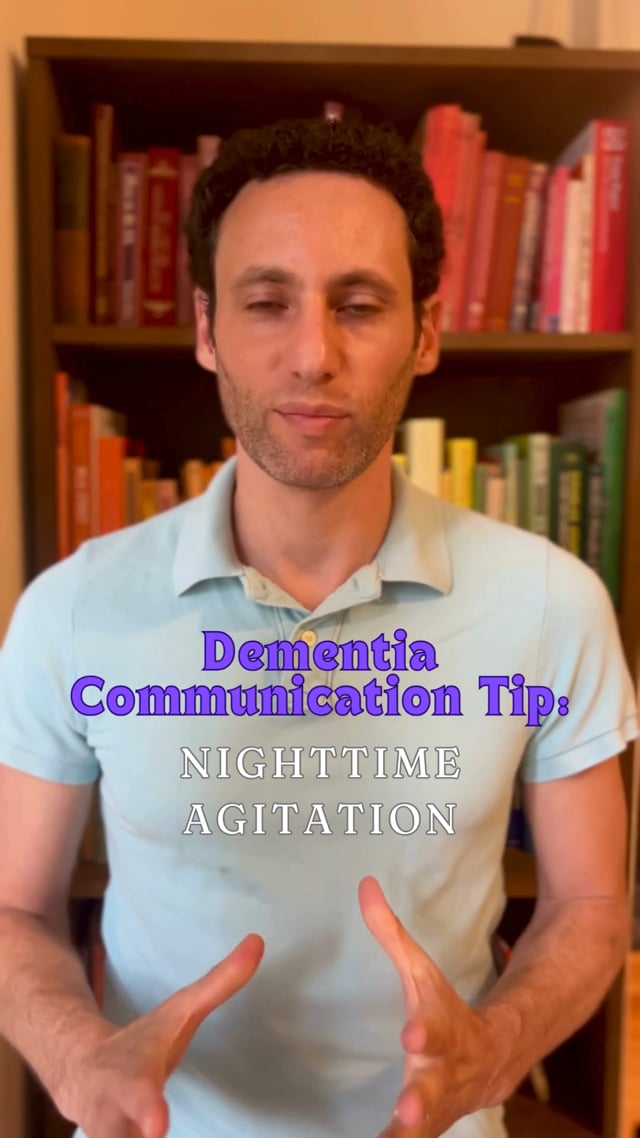
- Nighttime Agitation AidsIndividuals with dementia may exhibit aggression or agitation when they wake up at night (or even in the morning or from a nap). This is more a byproduct of confusion than being angry at a caregiver. Though, as a caregiver, it is always hard not to take anger as being directed at oneself, or to ignore it. Often, the best way to help the individual and diminish the agitation is to address the underlying issue: the confusion. Night lights leading the way from a bedroom to a bathroom are great guides to give the individual both a sense of space and control. Reminding the individual of where they are, in as simple a description as possible can also help alleviate the confusion.
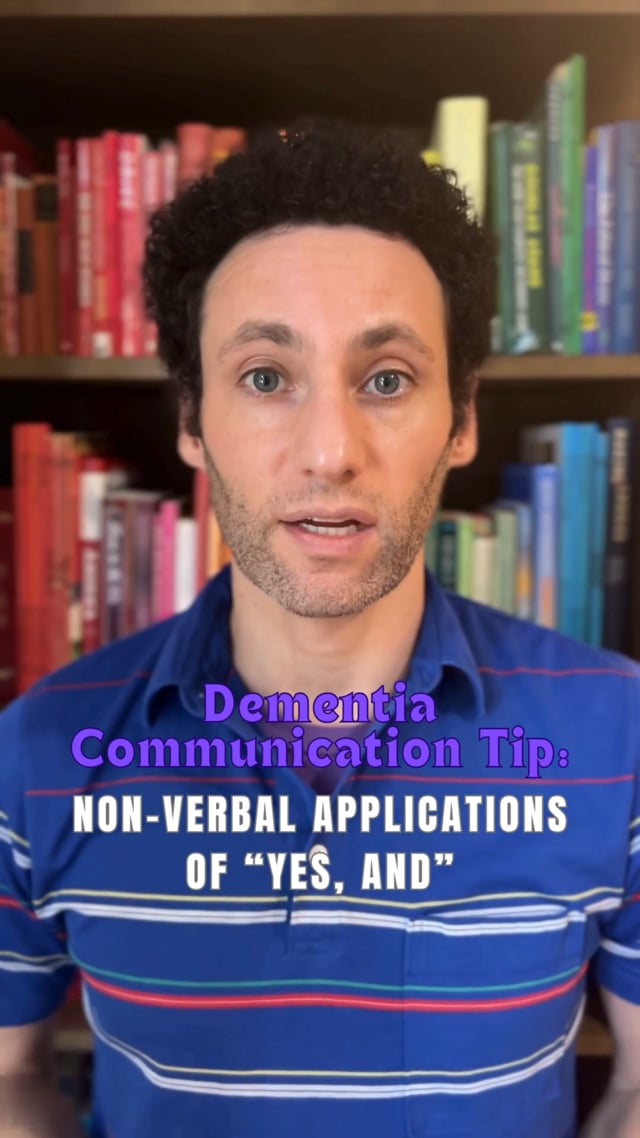
- Non-Verbal Applications of “Yes, And”The idea of “Yes, and” when it comes to dementia communication and care is much more than the verbal “Yes, and” in a conversation or a topic area. It applies to non-verbal items. Going along with somebody if they insist that they need to walk somewhere, or they need to do something, to go along with it, is to “Yes, and” the action. It also can be related to the environment. How can you build the environment to support the individual with dementia rather than block them? Locked doors in facilities sometimes can be frustrating for individuals with dementia. They don’t want to feel locked or caged, and so when they get to a locked door, that can be frustrating. They get to the end of a hallway and there’s a locked door because they can’t get out. It’ll be frustrating, so figuring out means to make that a “Yes, and,” would help. It’s a weird one, but sort of having like a way to hide the door that is locked so that they don’t see that can help their environment. You can do that in many different ways, and that was just one example, but try and think about how you can do that. You can “Yes, and” in the environment in non-verbal ways with individuals with dementia, and it can lead to much more productive interactions and quality of life for the individual with dementia.
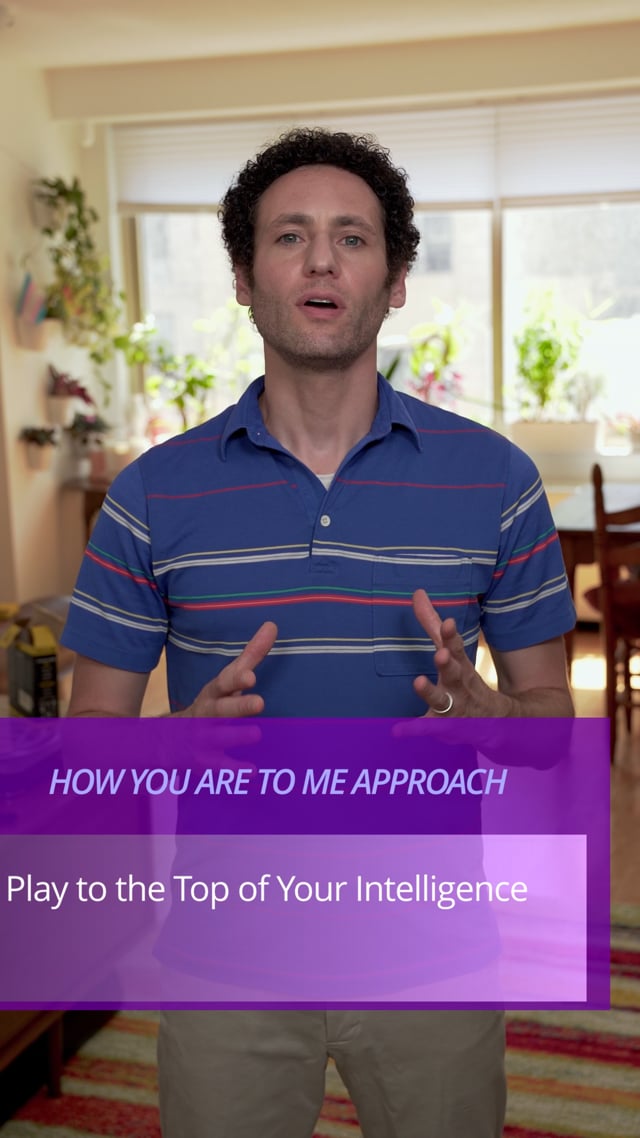
- Play to the Top of Your IntelligenceIn improv, there’s a concept called “playing to the top of your intelligence.” What this means is when you’re performing an improv show and you make a mistake, you see it, and the audience watching the show also sees it. And to ignore the mistake insults the intelligence of the audience. This translates over directly to having interactions with individuals with dementia. If they make a mistake, you make a mistake, one of you says something silly or stupid, ignoring it insults their intelligence and makes them feel like they’re not a person. They saw it. So ignoring it is like, “Oh, I’m gonna pretend you didn’t do that.” Which is not a sign of respect. Instead, do the opposite. Play to the top of your intelligence, acknowledge that mistake, acknowledge that silly thing. And it’s amazing the types of interactions, the laughs, the joy that comes out of acknowledging what life is, flaws.
- Preparing Ahead of TimeOne easy way to reduce your stress as a care-partner is to prepare things ahead of time – meal prep, laying out clothes, setting out items that will be used during the day, setting towels and bath chairs – the more you prep while you have the down time, the less you will have to do during the moments that could be stressful during a time of care-giving.
- ThreadingThe derivation of the concept of threading comes from the idea of a loose thread in a knitted sweater. When that thread is pulled, the stitches come out one by one, often in a straight line, but sometimes, as life (and knitting) goes, it jumps around a little. Just like following the path of the thread, threading (in dementia terms) is about following the path (or thread) of whatever conversation the person living with dementia jumps to. Threading is the act of repeatedly using the “Yes, And” technique when in conversation with a person living with dementia (PLWD). In improv we have a concept called “A-to-C” – we often think in A-to-B logic … I see A, that makes me think of B. In A-to-C, an A makes you think of B and that B makes you think of C and you go directly from an A to the C. Seeing a dog makes me think of a childhood pet (A-to-B). My childhood pet makes me think of a vacation I took where our pet joined. A-to-C is going from seeing a dog to immediately talking about a vacation from my past. Dementia and how it affects the brain sometimes leads PLWD to converse in A-to-Cs. The idea of threading is that instead of trying to pull the PLWD back to their initial topic, you join them for the ride and “Yes, And” any route they jump to. In your head, you may have trouble seeing the connection, but in theirs, it makes perfect sense. Correctly and trying to push them back to a previous topic could cause tension, they’ve moved on, so threading allows you to keep the conversation going. You’d be surprised what interesting things come up!
- Redirecting or DivertingRedirecting or Diverting combines the concepts of “Yes, And” and a guided form of Threading. Redirection is often used when a person living with dementia (PLWD) is in a state of anxiety, either from an hallucination that they believe is happening or something from their environment triggered anxiety (eg. wanting to leave when it may not be safe to let them leave the space). The trick is NOT to tell them they are wrong, INSTEAD “Yes, And” their emotional state – acknowledge their anxiety – and then AND their goal – if they need to go pick up a brother, suggest that you help them get their jacket, and then guide a threaded conversation by bringing up other, non-stress inducing items, like a framed picture they have, or in some area that they are expert. Dementia affects the brain’s processing and, just like with the concept of Threading by itself, PLWD’s focus can change pretty quickly. By Redirecting, you can resolve a situation of anxiety calmly and without conflict.
- Set Them Up For SuccessOne way dementia affects the brain is that it makes it hard for Persons Living with Dementia (PLWD) to handle complex tasks – the act of coming up with what is an appropriate solution and to make a selection can be overwhelming. A great way to set up a PLWD for success is to break complex tasks down into simpler tasks. One example is laying out an individual’s clothes in the order they would put them on – you remove the complex task, and create an environment in which they can complete this multi-step task themselves, without any obstacles.
- Squeeze & ReleaseOne of the other ways that dementia sometimes can affect individuals is that their brain-to-motor skills are modified and this comes out in the form of being unable to let go of a grip of a handshake. Situations appear where you’re holding somebody’s hand and then they refuse to let go. It’s not that they don’t want to, it’s just that their brain-to-motor tasks are having some kind of miscommunication. The best way to handle this is instead of trying to like pry your hands apart, you use what is called “Squeeze and Release”. You have your hands and you squeeze their hand with your hand, and then you release that squeeze. What that does is it innately tells them to “Yes, and” your motion and so then they squeeze and release in return. That allows them to release the grip without any stress or tension on the situation.
- The “And” of “Yes, And”Sometimes the concept of “Yes, And” can be confusing. When broken down, the “Yes” is an agreement to be on the same page with the other person, and the “And” is showing them that you are joining them where they are. A great way to “And” a conversation that is jumping around with someone with dementia is to ask a question or make a statement about the subject that they are discussing – it lets them know you aren’t just there, but you are participating and are listening.
- The Arts As a Means to ConnectThe Arts are an extremely powerful tool to use to connect with individuals living with dementia. Music, dance, singing, talking about paintings or photographs or sculptors, or even a beautiful (or horrible) sports play is the arts, at a certain level. Things that have high emotional connection and can be discussed via opinions rather than a specific memory recall all can serve the same purpose. So find the art that works best for your loved one and try to discuss that as a means of connecting better with them.
- The Power of Human TouchThere are certain innate features of the human body and our interactions with each other; one of the most powerful is that of physical touch. Preterm infants, when given infant massage improve faster. Large studies have shown that physical touch leads to less depression and increases in oxytocin and other biological chemicals that help the mind and body. When we dance, we touch each other gently. Hugging, kissing, even just holding hands can be a powerful form of connecting with one another. So do not take lightly one of the simplest non-verbal ways to communicate. The simple act of holding or squeezing the hand of a loved one living with dementia can go a long way. Especially in comparison to how many people are treated in hospital or clinical environments where human touch is all but vacant and discouraged.


The How You Are to Me Approach utilizes ecopsychosocial (non-pharmacological) approaches to dementia care, in line with the I’m Still Here teachings, with a focus on integrating foundational improvisational techniques (Ex. “Yes, and”, the Role of Status, being in the moment, responding to what you are given, listening, and playing to the top of your intelligence). Evan believes that those living with dementia still retain their personality and the essence of who they are, regardless of if they can remember a specific moment in their past, and that by modifying the way we communicate we can both provide those individuals with a fuller life and create tools to improve the relationship they have with all those around them.
What people are saying
“First - let me say this is a very eloquent statement of the power of love – and of the challenges of both living with dementia and being a full-time caregiver. It has a wonderful balance of both positive and difficult moments for both people.”

“[In the film] these are two people who are married and have dedicated their lives to each other, and she [Margaret] is very good at going with the flow--a very important and necessary skill. She [Margaret] realizes that to stay connected, she must change how she communicates with her husband as he too changes. This film teaches how to do just that; it is a guideline for people living with dementia; teaching viewers that there is hope.”
All rights reserved. This site or any portion thereof may not be reproduced or used in any manner whatsoever without the express written permission of the publisher except for the use of brief references in a review. The creation of derivative works based on the materials on this website, including the use of this content for the development, training, or fine-tuning of artificial intelligence systems, machine learning models, or large language models (LLMs), is strictly prohibited. This prohibition applies to all forms of data mining, scraping, and automated ingestion.